


This is an abridged version of a comprehensive report with particular focus on the relevance of the conference in the classroom. It includes inputs from Harpreet Kaur, DPS Ludhiana, Nikhil Ranjan Pawar, DPS Pune and Aniket Nandy, DPS Coimbatore and has been compiled by Rohit Kumar, DPS Patna of the TAKSHILA EDUCATIONAL SOCIETY (TES).

“Tolerance does not grow with banning what is thought to be unpalatable; it grows with arguing and talking about it..." Romila Thapar
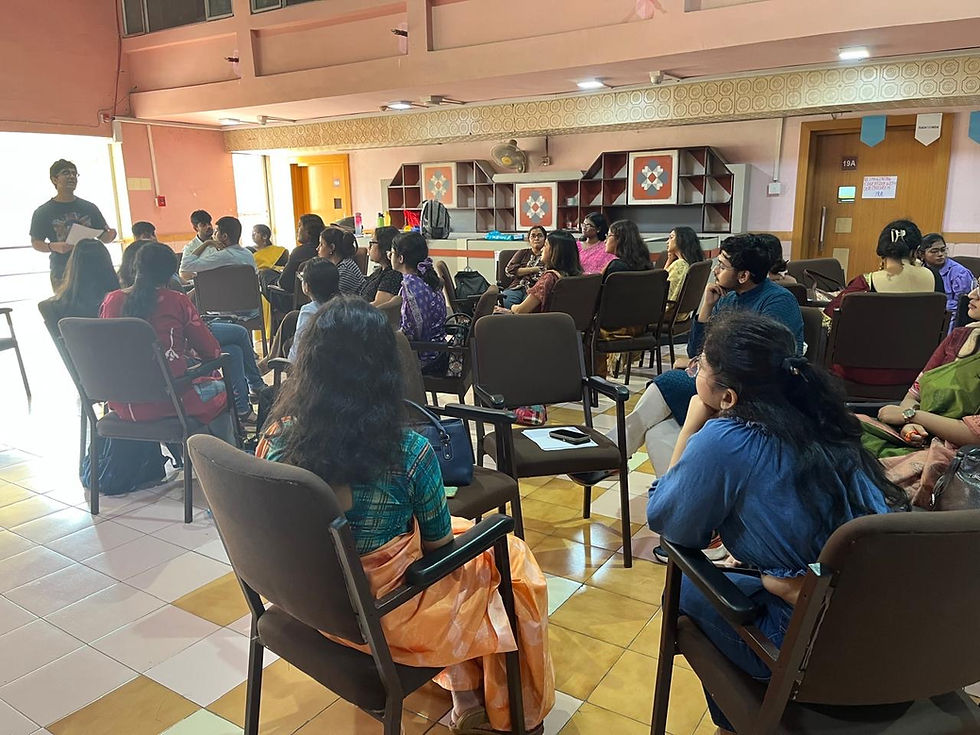
The three-day conference offered a coherent exploration of the relationship between historical knowledge and contemporary public life. Sessions addressed constitutional history, memory, archives, women’s movements, post-independence history, caste and social reform, cultural politics, the freedom struggle, journalism and history education.
A recurring methodological message was that history should be approached as an enquiry. Learners should be encouraged to ask questions, examine evidence, compare perspectives, identify omissions, corroborate claims and distinguish evidence from interpretation.
The conference also challenged a purely chronological and leader-centred approach to history. Everyday experiences, local institutions, community memories, oral narratives, photographs, social practices and the contributions of ordinary people were presented as legitimate and valuable avenues of historical enquiry.
For school education, the strongest implication is pedagogical: the objective is not simply to add more historical information but to strengthen students’ ability to think historically. This aligns closely with competency-based education, source-based assessment and interdisciplinary learning.
SESSION OVERVIEWS AND PEDAGOGICAL POSSIBILITIES
Assembling India’s Constitution - Rohit De and Ornit Shani
Key Takeaway: Constitution-making extended beyond the Constituent Assembly through diverse publics and parallel processes.
Educational Relevance: Students can examine petitions, debates and local experiences to understand the Constitution as a living framework.
History and the Present - Angana P. Chatterji
Key Takeaway: Historical structures influence contemporary questions of power, identity, memory, citizenship and belonging.
Educational Relevance: Students can compare accounts and distinguish evidence, memory and interpretation.
Personal Pre-history and History of the Present - Krishna Kumar
Key Takeaway: Personal and family experiences can become starting points for historical enquiry and to questions about change, continuity, migration, occupations, institutions and social practices.
Educational Relevance: Family and oral-history activities can explore change, continuity, migration, occupations and social practices, with memories requiring corroboration.
Histories of the Present: Reimagining History - Vennila A.
Key Takeaway: History should move beyond kings, battles, dynasties and dates to include social, cultural, linguistic and everyday histories.
Educational Relevance: DPS Patna can strengthen local-history, oral-history, museum-based, neighbourhood-mapping, source-analysis and interdisciplinary projects.
Gandhiji: Noakhali to Delhi, His Pathway to Death - Sudheesh Yezhuvath
Key Takeaway: Gandhi’s final phase was explored through journeys and documentation of places associated with his life.
Educational Relevance: Fieldwork, photography and oral testimony can complement written sources in teaching non-violence, communal harmony, reconciliation and historical memory.
Women in Movement - V. Geetha & Urvashi Butalia
Key Takeaway: The session examined feminism and women’s movements across diverse contexts and how their interpretations change over time. historical movements may be reconsidered over time and their legacies are therefore not necessarily static.
Educational Relevance: Students can study women’s history through multiple regional experiences and perspectives.
Futures Past: Archives and Contemporary History - Aparna Vaidik
Key Takeaway: The present can be viewed as an archive for the future; archives are not neutral - they reflect selection, preservation and interpretation.
Educational Relevance: Schools can create institutional archives of photographs, notices, student work, interviews and event records.
Workshop: Archiving Futures Past - Aparna Vaidik
Key Takeaway: Participants considered what evidence from the present should be preserved for future generations.
Educational Relevance: A “Future Archive” activity could have students select materials that future historians might use to understand their generation.

The History of Our Own Times - Srinath Raghavan
Key Takeaway: The session examined contemporary concerns and historical writing, with particular attention to the challenges and opportunities of writing India’s post-independence history. Contemporary history presents challenges because memories, sources and interpretations remain contested.
Educational Relevance: Students can compare oral memories, newspapers, photographs, official documents and secondary accounts.
Reading Rooms and Surnames: A Tamil History of the Embraces, Refusals and the Present -Vignesh Rajahmani
Key Takeaway: Everyday institutions and practices can reveal wider histories of social reform.
Educational Relevance: Students can investigate libraries, school records, naming practices and neighbourhood organisations as historical evidence.
In Conversation: Srinath Raghavan and Vignesh Rajahmani
Key Takeaway: The session examined scholarship, journalism and public debate, including the rise of social-media “synthesizers.”
Educational Relevance: Students should distinguish confidence from expertise, evaluate sources and verify claims.
Brahma Prakash — Choreographic Acceptations of the Counter-Revolution of Hindutva
Key Takeaway: Political culture can be examined through cultural forms, visual symbols and everyday experiences.
Educational Relevance: Visual-source analysis can strengthen visual literacy and source criticism.
Akshaya Mukul & Barathy M.G. — Moral Universes of Sanatana and Nastika
Key Takeaway: The session compared Gita Press and the Madras Secular Society through issues including caste, women, education, print culture and social reform.
Educational Relevance: Students can compare organisations, contexts, objectives, publications and influence using evidence.
The Last Heroes: Foot Soldiers of Indian Freedom - P. Sainath
Key Takeaway: The session broadened the freedom struggle beyond prominent leaders by highlighting lesser-known participants.
Educational Relevance: Students can research lesser-known freedom fighters using reliable sources.
The Profound Difference between ‘Media’ and ‘Journalism’ - P. Sainath
Key Takeaway: Journalism can document everyday life and under-recorded experiences, including through the People’s Archive of Rural India (PARI).
Journalism and public documentation can preserve experiences that may otherwise remain under-recorded.
Educational Relevance: Students can undertake supervised local-history documentation through interviews, photographs, archives and oral histories, with verification and consent.
Closing Round Table: Reflections - Apoorvanand
Key Takeaway: Historical knowledge is closely connected with contemporary public life, requiring responsible research, communication and interpretation.
Educational Relevance: Classrooms should permit disagreement while requiring evidence, comparison, acknowledgement of uncertainty and respectful communication.
Contemporary history should include visual culture and everyday experiences alongside formal political events.

The conference provided an intellectually stimulating and professionally relevant engagement with the teaching, learning and public understanding of history. Its greatest significance for school education lies not in adding more historical information to the classroom, but in reconsidering how students learn to think historically.
Across the three days, the sessions demonstrated that history can be approached through constitutional documents, family memories, archives, photographs, local institutions, social movements, cultural practices, journalism and the experiences of ordinary people. These approaches can make history more connected to students’ lives while maintaining the importance of evidence and historical method.
The conference also highlighted the challenges created by the contemporary information environment. Students encounter historical claims from multiple sources, but availability does not automatically ensure reliability. Consequently, source evaluation, corroboration, contextual understanding and responsible communication should become integral components of history education.
For educators, the conference reinforced the importance of creating classrooms in which students are encouraged to ask questions rather than merely receive answers. Historical learning should enable students to investigate whose voice is represented, whose voice may be missing, what evidence supports a claim, why interpretations differ and how conclusions can be responsibly justified.
For Delhi Public Schools, under the aegis of Takshila Educational Society (TES) , the conference provides practical possibilities for strengthening source-based learning, local-history projects, oral history, media literacy, competency-based assessment and interdisciplinary learning.


Comments